Chad McCoy shares how two decades in combat environments and experience supporting weapons system development shaped his approach to building Firestorm. Drawing on firsthand insight into gaps between operators and traditional acquisition, he discusses creating modular UAV systems, scaling through distributed manufacturing, securing Air Force contracts, and building a defense tech company focused on real-world mission requirements.
You served in the military before co-founding Firestorm. How did your time in service influence your decision to enter the drone and defense- tech space?
There was a clear imperative to change how products are built to meet actual warfighter requirements. After two decades in combat environments and later working at the Doolittle Institute alongside teams building weapons systems for aircraft, I saw firsthand how disconnected operators often were from product development decisions.
In operational units, especially within premier special operations organizations, we were given autonomy and access to advanced systems. That experience made the gaps very visible. We routinely relied on commercial off the shelf technology to meet emerging threats because traditional acquisition programs could not adapt fast enough.
When you have spent years operating in the most demanding environments and using the full spectrum of American military power, you develop a clear understanding of what works, what does not, and what is missing. Entering defense tech was not about building drones. It was about ensuring operators are part of the solution and that capability evolves at the speed of the fight.
During your time in service, what specific capability gaps or mission challenges did you observe that ultimately influenced Firestorm’s approach to UAV design and manufacturing?
The most significant gap I observed in unmanned aerial systems was rigidity. Most platforms were designed for a single mission set. They were expensive, slow to modify, and difficult to integrate with emerging payloads or new autonomy stacks. Even minor changes could become cost prohibitive.
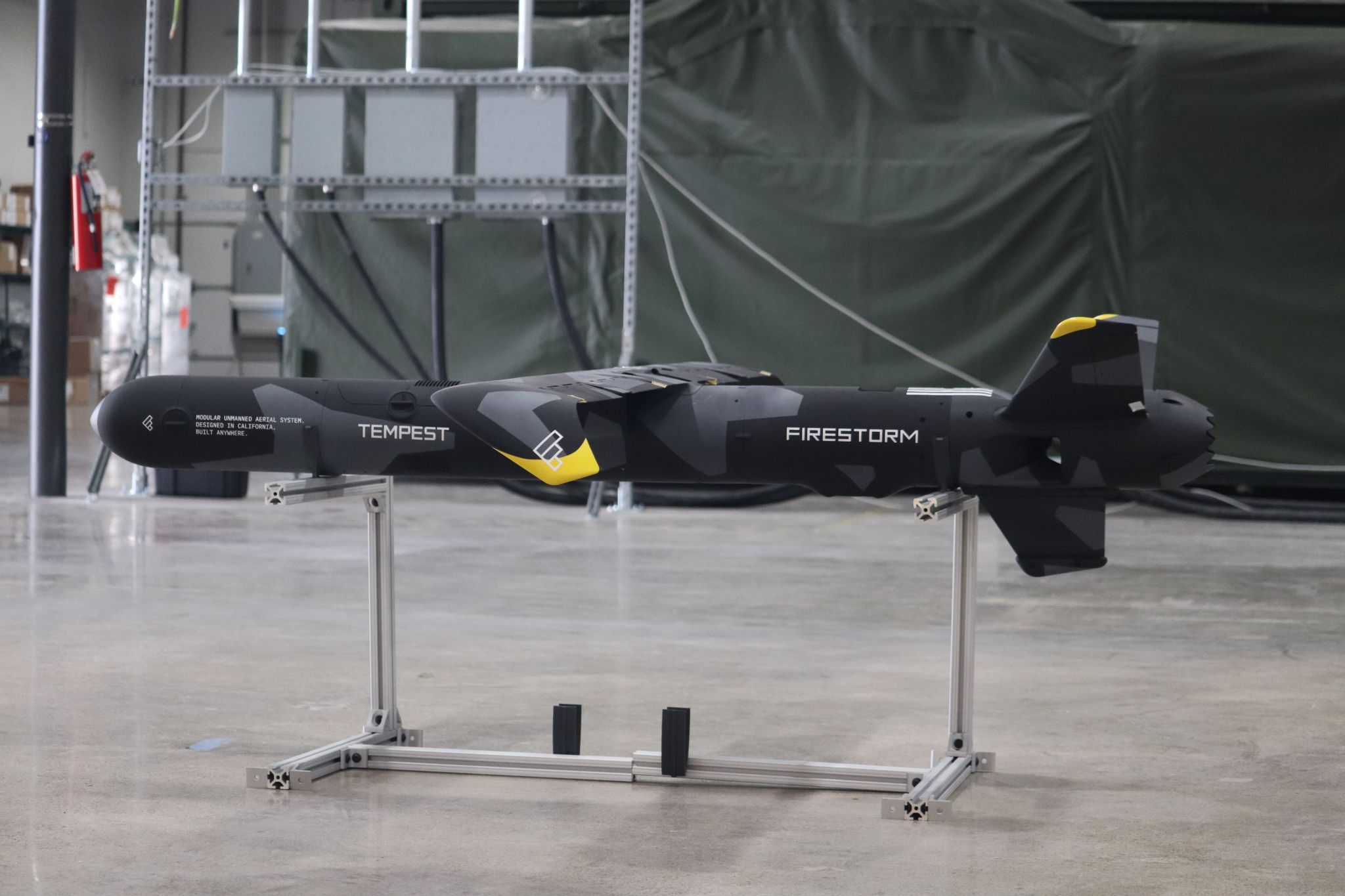
Firestorm approached this differently. We prioritized modularity from the beginning. The aircraft is designed to integrate new sensors, radios, navigation systems, and mission payloads without requiring a full redesign. It is meant to adapt continuously as requirements evolve.
On the manufacturing side, we addressed another major constraint: scalability and iteration speed. By enabling containerized, expeditionary manufacturing at the forward edge, we reduce dependence on long supply chains and allow rapid prototyping and production closer to the point of need. That gives operators and partners more control over how systems evolve and shortens the timeline between concept and deployment.

Firestorm has scaled rapidly in just three years. What were the most critical strategic decisions you made early on that enabled that level of growth?
The most important decision we made was to listen relentlessly to the warfighter and incorporate feedback into rapid product iteration. In a crowded unmanned systems market, responsiveness and execution matter more than marketing.
The second major pivot was strategic. We stopped viewing the aircraft as the only product and focused on the harder problem of scalable manufacturing. Many startups compete on airframe performance. We focused on how systems are produced, modified, and scaled.
By investing in distributed and additive enabled manufacturing, including our xCell expeditionary capability, we positioned Firestorm around production sovereignty and scalability, not just flight performance. That differentiation allowed us to create a category rather than compete feature for feature.
Securing a $100M U.S. Air Force contract is a significant milestone for any company. What specific steps did Firestorm take to build credibility and ultimately win that award?
It is important to clarify that the $100 million award is an Indefinite Delivery, Indefinite Quantity contract ceiling. It authorizes up to that amount but does not represent obligated funding unless task orders are issued.
Some of our most meaningful funded programs originate with Air Force operational units, including Air Force Special Operations Command, program offices at Wright Patterson Air Force Base, and initiatives supported through the Office of the Under Secretary of Defense for Research and Engineering, including APFIT. Those efforts represent real mission alignment and funded execution.
We built credibility through consistency and transparency. We did not overpromise. We were candid about risk, limitations, and timelines. In a system that relies heavily on trust, telling the truth and pricing fairly created long term relationships. Operational credibility opened the door, but delivery and performance sustained it.

Firestorm successfully raised a $47M seed round to scale XCELL. What factors do you believe gave investors the confidence to commit at that level in a defense-focused startup?
Early government adoption was critical. Programs such as SBIR Phase II awards demonstrate that a government customer is willing to validate and fund early capability. That validation provides investors with tangible proof of demand.
However, what differentiated us was product market alignment. Rather than relying on large theoretical total addressable market projections, we focused on named customers, funded programs, and executable requirements.
There is often a narrative around massive global drone spending projections. The reality is that not all of that spending is accessible or addressable. Investors recognized that we were focused on realistic pathways to revenue rather than speculative future programs.
Additionally, our distributed manufacturing model resonated in international markets where sovereignty and localized production are strategic priorities. Instead of simply exporting systems, we enable partners to produce capability domestically within regulatory frameworks. That positioning strengthened long term growth potential and investor confidence.
How do you think about deploying large amounts of capital responsibly in a sector like defense manufacturing, where growth, compliance, and mission readiness must all align?
Deploying capital responsibly in defense manufacturing begins with realism. Production capacity and compliance infrastructure are foundational.
History shows that industrial capability can determine strategic outcomes. During World War II, American industry pivoted rapidly and produced at scale. Manufacturing capacity was decisive.
Today, there is significant marketing in defense technology, but scalable production remains a constraint across the ecosystem. Responsible capital deployment means investing in manufacturing infrastructure, quality systems, workforce development, cybersecurity compliance, and supply chain resilience.
In this sector, reputation is everything. If you cannot produce at scale what you claim you can produce, credibility erodes quickly. Growth, compliance, and mission readiness must be aligned from the outset.
As a high-growth startup operating in the GovCon ecosystem, what are the biggest differences you’ve experienced compared to working with or competing against traditional defense primes?
The primary difference is structure, not talent. Traditional defense primes are filled with exceptional engineers and scientists, and in some cases, they are also investors in companies like ours.
However, primes operate within large program of record frameworks and multibillion dollar pursuits. That structure can limit rapid pivots, even when good ideas exist internally.
Startups can move faster, accept calculated risk, and pursue opportunities that may be too small or unconventional for large primes to prioritize. That agility can be a significant advantage.
At the same time, primes have global access, deep contracting infrastructure, and established integration pathways. The ecosystem is not binary. In many cases, collaboration between startups and primes is complementary rather than purely competitive.
For veterans or founders looking to enter the UAV and government contracting space today, what would you prioritize in the first 12–24 months to build credibility and long-term positioning?
In the first 12 to 24 months, credibility should be prioritized over visibility. Awareness matters, but delivery matters more.
Founders should focus on securing early validation through pilot programs, SBIR awards, or limited operational deployments. These create proof points that demonstrate real demand and performance.
Brand clarity is also important. Within the Department of Defense, attention is fragmented. Clear messaging about the specific problem you solve and for whom is more effective than broad marketing.
Veteran founders bring significant value when they have authentic operational experience and can translate that into technical requirements. However, credibility must be grounded in reality. Overstating battlefield exposure or technical expertise damages trust quickly.
Long term positioning in GovCon is built on consistent execution, transparent communication, and solving specific problems for specific customers repeatedly.